

Monday, June 4, 2018
Sunday, June 3, 2018
1:06 AM
The best Bitcoin exchange of 2018

Welcome to our guide to the best Bitcoin exchange of 2018. This list is essential if you're serious about making money from Bitcoins and other cryptocurrencies.
But what is a Bitcoin exchange, and how can you be sure you sign up to the best Bitcoin exchange? Well, think of Bitcoin exchanges as digital marketplaces for people to buy and sell Bitcoins using different currencies. The Bitcoin can be exchanged for either fiat money (legal tender) or other alternative cryptocurrencies such as Ethereum. The exchange serves as the middleman for traders of the cryptocurrency.
Being able to purchase Bitcoin is the initial step to trading in it. Just like trading a stock, Bitcoin exchanges charge transaction fees, which range from 0 to 1%. In order to trade Bitcoin on an exchange, the user needs to have an account, and go through a series of steps to be verified. Remember that Bitcoin and alternative cryptocurrencies are a completely digital currency, and there are no physical Bitcoins.
However, before plunging in with both feet, users should be aware of what to look for in choosing a Bitcoin exchange for their cryptocurrency transactions. This is analogous to the issues and potential pitfalls in making a choice of where to do your banking, or open an online brokerage account. Furthermore, bear in mind that unlike banks and stock trading, Bitcoin trading is largely unregulated by most countries, although this is changing as its popularity increases.
A good place to start is to look at the virtual coins which are supported by an exchange. With over 4,000 cryptocurrencies, and additional ones being added all the time, it is key to figure out which currencies you want to trade in, and then match the exchange that deals in those. For example, Ethereum mining has recently become more popular, but not all Bitcoin exchanges support this alternative cryptocurrency.
Language barriers
Next look at the country that is hosting the Bitcoin exchange. Some are in less regulated countries, and there may be additional problems if something goes awry. This can include time differences, international long distance costs, and language barriers. In general, it’s preferable to find an exchange that speaks your language.
Additionally, pay close attention to the fees levied. While all these exchanges charge transaction fees – after all, they are businesses looking to make a profit – as the user, it is obviously best to find one with the lowest costs in order to maximize your own profits.
Also look for a secure trading platform, and a Bitcoin exchange which has robust security measures. After all, you wouldn’t use a bank that didn’t have a vault, and stored its money on the counter…
Desirable security features include two-factor authentication, SMS or email alerts, encrypted emails, and wallet monitoring. A smartphone app can also be very useful in terms of accessing and monitoring funds – but equally, poorly implemented software can represent a security risk.
Finally, look for an exchange which is doing a good volume of trading – in other words, one with a high number of trading pairs, and high liquidity.
Now that we know the features to look for in the best Bitcoin exchanges, let’s move on to pick out our particular favorites.
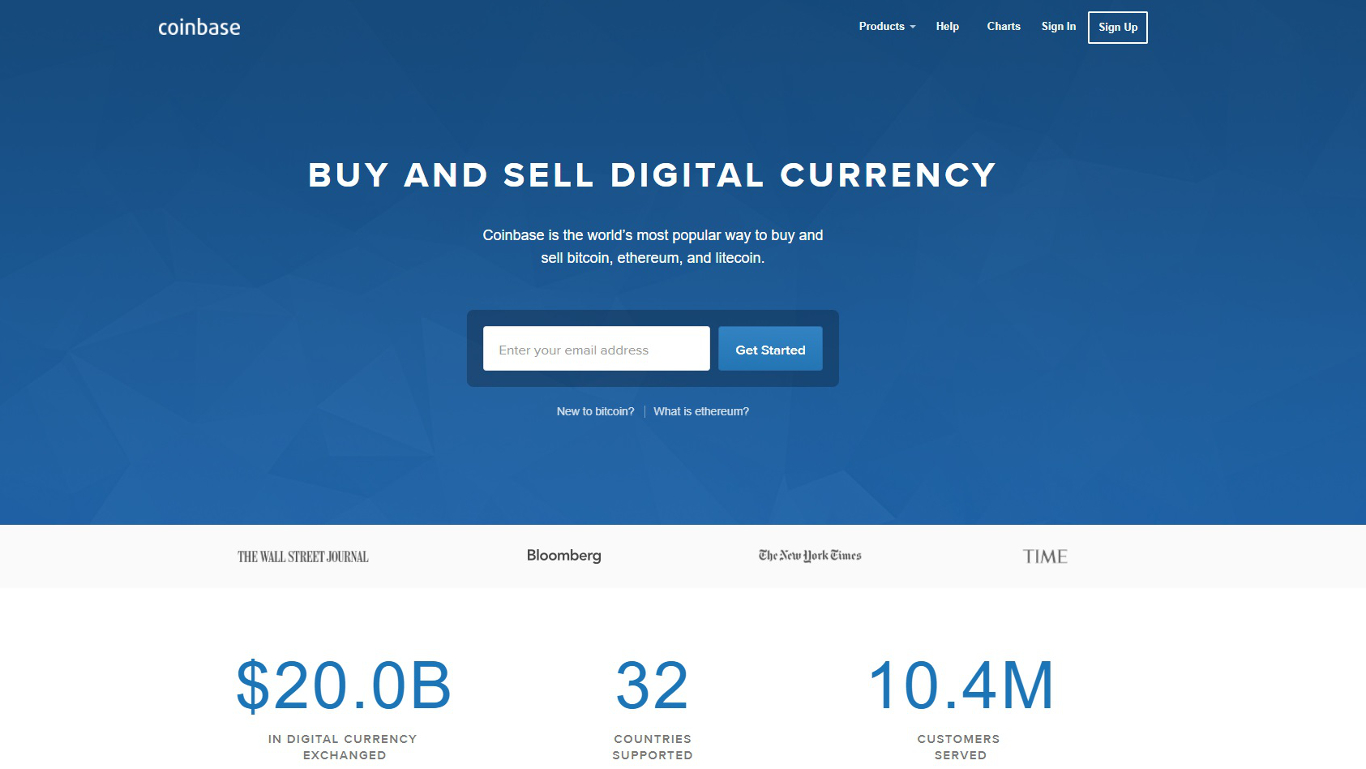
This is a US-based exchange which was founded in 2012, and it supports over 32 countries. Coinbase exchanges Bitcoin and the alternative cryptocurrencies of Ethereum and Litecoin, and it’s the largest of the exchanges, claiming $20 billion (£15 billion) in currency exchanged. In 2014 Coinbase created GDAX, the Global Digital Asset Exchange which was developed for professionals with high volumes of trading.
The firm offers a mobile wallet, offline storage, and insurance protection for currency stored on its servers. Coinbase supports several fiat currencies: British Pounds, US Dollars, Euros, Canadian Dollars, Australian Dollars and Singapore Dollars.
The Coinbase exchange has a 1% flat fee for each purchase, while cryptocurrency deposits and withdrawals are done without any fees. A streamlined user interface which is ideal for novice traders – and fast trades – makes Coinbase a popular exchange with traders.

Gemini Exchange is another US-based outfit founded by the Winklevoss twins – the pair who sued Mark Zuckerberg over social networking, and were awarded $65 million (£48 million), which they put to use as venture capitalists. This exchange is based in New York, and is available in 45 US states, as well as the UK, Singapore, South Korea and Hong Kong.
Gemini’s only supported fiat currency is US dollars, and it only trades Bitcoin and Ethereum. Gemini does not charge deposit or withdrawal fees, and levies a low flat rate of 0.25% for trades, to both the buyer and the seller.
Another advantage of Gemini is that it’s a New York state limited liability trust company, and is regulated by New York’s Department of Financial Services. Close proximity to the Wall Street financial markets allows the company to easily provide a bridge from more traditional investments to newer cryptocurrency markets, for both individual and institutional investors.
Gemini is also notable in that it accepts ACH transfers for fast access to money for trades. A potential downside is that the interface is not particularly novice-friendly.
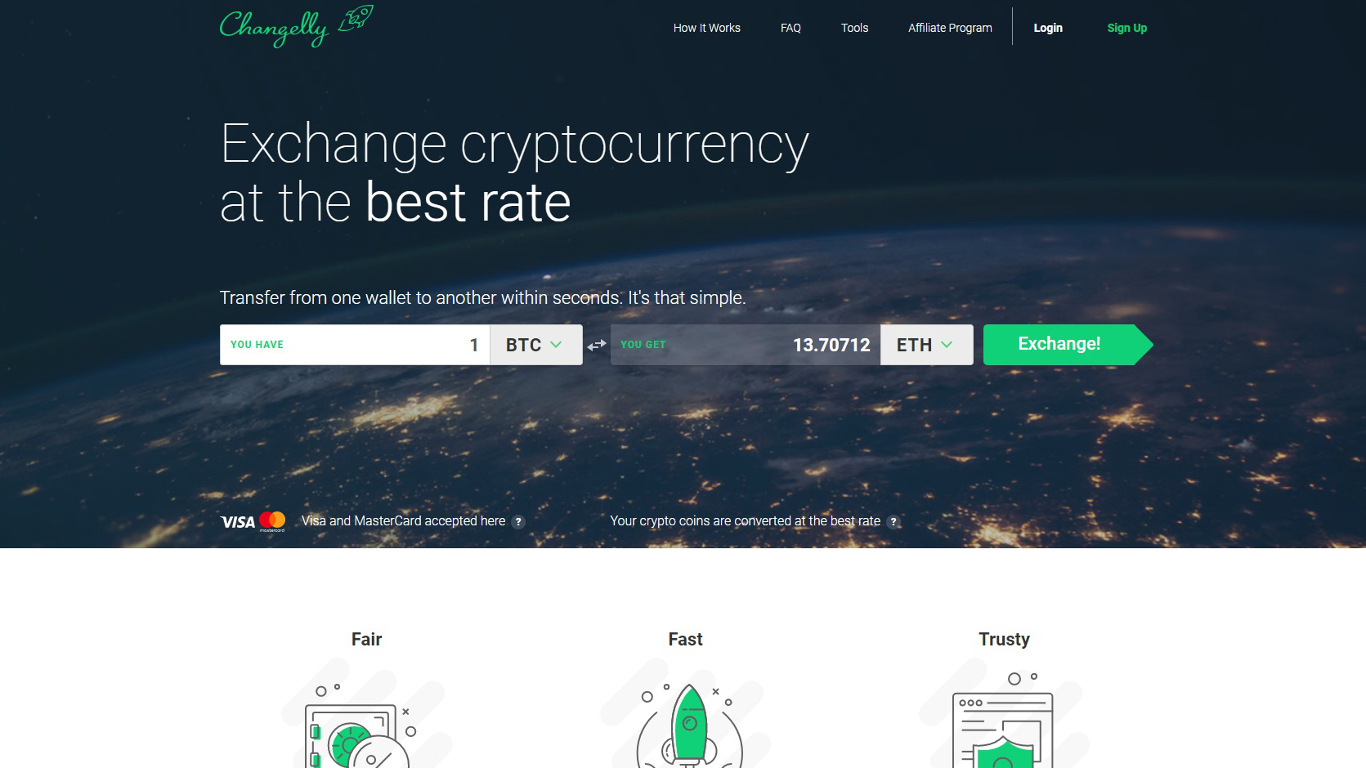
Changelly is a cryptocurrency exchange with support for many more virtual currencies than most, including Monero, Dash, Bytecoin, and DigitalNote among others. If you are mining a less popular currency, chances are that Changelly can exchange it for you.
This exchange comes from the popular mining platform MinerGate which provides a merged mining pool across Windows, Mac, Linux and Android operating systems. While Changelly focuses on exchanges between different cryptocurrencies, users can also purchase cryptocurrency with US Dollars or Euros.
Note that this exchange has a shorter track record, as it only entered the market in 2016. Exchange fees are 0.5% on transactions.

Cryptopia was founded in 2014, aiming to be a comprehensive exchange that focuses on the user experience, with integration of additional services including a marketplace and wallet. It is based in Christchurch, New Zealand. Cryptopia is notable in that the first level of verification happens very quickly, and only requires an email address for initial verification.
While Cryptopia does not support fiat money trading, it does support a ridiculously large number of cryptocurrencies: over 400 to date, with more being added all the time. The trading fee is also a low 0.20% per transaction, which compares favorably with many competitors. The website is quite large and sprawling, meaning that new users might find their first experiences with the site a little daunting.
- We show you how to mine Bitcoins and you can secure them using one of the best VPN services we've identified
from TechRadar - Internet news https://ift.tt/2BdSM5X
via IFTTT
Saturday, June 2, 2018
Friday, June 1, 2018
7:11 PM
What should you consider before moving B2B sales models online?
The world of ecommerce continues to change at lightning speed. According to the Office of National Statistics, in 2017 in Great Britain, 77% of adults had bought goods or services online in the last 12 months.
This trend has spilled over into B2B, with companies finding that their customers now expect the same seamless buying experience that B2C offers – according to Forrester/Internet Retailer B2B Buyer research, 53% of these buyers will make half or more of their work purchases online by 2018, and 74% say buying from a website is just more convenient. It therefore makes perfect sense for organisations to move from an offline-only sales model to a hybrid of offline and online and perhaps online-only.
However, B2B business practices have been built up over many years supported by legacy systems and often out-dated ways of working have become so established that this results in a B2B ecommerce opportunity that remains largely untapped. Taking a B2B business online can be a complex transition for any organisation and requires a thorough review of current practices and a strategic look at business goals. There are key questions merchants need to ask before they begin the transition to move their sales-models online, in order for them to be fully prepared.
- Looking to get online now? These are the best ecommerce platforms of 2018
How important is our website in our sales process?
If your organisation uses highly customised pricing or you are bound by agreements with distributors, you may use your website as a catalogue of rich product content but don’t allow buyers to purchase goods online. These sites can work as search-engine friendly catalogues that generate leads for offline sales but converting to a fully functional B2B online ordering portal is the logical next step.
A fully transactional ecommerce website for customers who have pre-existing relationships with account managers can offer an easy way to re-order and buy and can tailor functionality dependent upon the customer or job role.
Do we know our online pricing strategy?
If your organisation uses a pricing structure that has evolved through organic growth you are likely to have customers who have complex specific pricing agreements. Replicating a unique set of contracts online requires a platform that supports specific product pricing and discount negotiation otherwise you will be severely limited to groups of customers who all have standard pricing.
Is our sales team fully engaged?
Offline sales teams often view ecommerce as a compromised alternative that don’t take into account the skills they have developed over years of hard work. If sales are predominantly order takers, then self-serve websites will be seen to threaten their role. It is therefore important that sales and the ecommerce site works together to empower your sales team and not replace them.
A new eCommerce website can enhance the sales process by giving them the time to nurture their existing relationships, cross sell and up-sell and spend more time looking for new opportunities by removing a lot of the time-intensive, repetitive tasks that can consume a salespersons’ work day.
What other information do we need to consider?
In order to sell effectively online, your customers expect to see real-time inventory availability, pricing, and shipping information. In most cases, this data lives in other systems, such as your ERP, inventory management, and Product Information Management systems. In order to provide a full omni-channel customer experience and up to date information you will need a solution that offers order management and integrates well with other systems.
SEO – what’s the opportunity?
You may well already have a website that works when someone searches for your company name but what about your products? You may have a useful site, but if no-one knows you’re there, how can you optimise sales? One of the benefits of building a strategic ecommerce site is to increase the visibility of your brand through your product catalogue as it gets crawled and indexed by search engines like Google and Bing.
SEO helps buyers find your site, but you will need content that goes beyond product descriptions and price. Original and useful content is important and use descriptions that bring the product to life and differentiate them for customers, and do not rely on just product IDs.
Don’t wait
eCommerce is connected to every level of your business, so its impact is significant. It’s not like Accounting or Warehouse management that primarily exist to support one function of the organisation. It’s worth engaging experts to help you in the early stages of a new or revitalised B2B ecommerce project, to help you develop your strategic roadmap. The future of B2B business is tied to the success of ecommerce so it is critical to get this right from the very beginning. The faster you move your business online, the more successful you will be in attracting the next generation of buyers – and they are the ones who will grow your business fastest.
Brian Green is director of EMEA, Magento
- Here's our selection of the best ecommerce hosting in 2018
from TechRadar - Internet news https://ift.tt/2LM89Fj
via IFTTT